
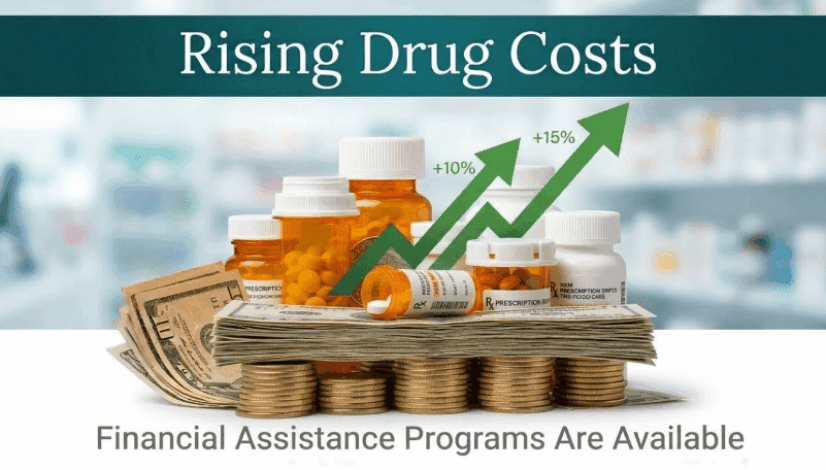
MPN Financial Assistance: Research Reveals Growing Need
Medicare reforms have helped some patients, but MPN financial assistance programs remain essential for those struggling with the cost of blood cancer treatment
by David Wallace
The Patient Advocate Foundation (PAF), which recently completed a strategic merger with the PAN Foundation in March 2026 to form the nation’s most comprehensive nonprofit dedicated to helping patients navigate, access, and afford their care, released new research that paints a concerning picture for Medicare patients living with serious and chronic conditions. The findings reveal that despite reforms introduced by the Inflation Reduction Act, many patients continue to face significant barriers to accessing and affording their medications.
For patients living with myeloproliferative neoplasms (MPNs), where treatment often involves high-cost therapies like JAK inhibitors and pegylated interferon, these findings underscore why MPN financial assistance remains a lifeline for so many in our community.
Key Takeaway: The $2,000 Cap Helps, But It Is Not Enough
One of the most notable reforms from the Inflation Reduction Act was the introduction of a $2,000 annual out-of-pocket cap on Medicare Part D prescription medications, which took effect in 2025. According to an analysis conducted by IQVIA across five high-cost therapeutic areas, this cap did reduce the number of patients abandoning their therapies by roughly 23 percent. It also helped more patients stay on treatment throughout the year compared to 2023.
However, the research found that 40 percent of patients are still walking away from their prescribed therapies, with cost remaining a major factor. For patients starting a new medication later in the year, the financial burden can be especially challenging because they have not yet had time to accumulate costs toward the cap.
MPN Financial Assistance From Charitable Foundations: A Game Changer
Perhaps the most striking finding in the research is the impact of financial assistance from charitable foundations. Among patients receiving no foundation support, the therapy abandonment rate was 58 percent. Among those who did receive support, that number dropped to just 5 percent.
That is a powerful reminder of how important organizations like the newly combined Patient Advocate Foundation (which now includes the PAN Foundation) and other disease-specific assistance programs are for patients who need help covering the cost of their care.
Most Medicare Patients Have Never Heard of the Prescription Payment Plan
The Inflation Reduction Act also introduced the Medicare Prescription Payment Plan (MPPP), which allows patients to spread their out-of-pocket drug costs across the year rather than paying them all upfront. The research found that in high-cost therapeutic areas, participation in MPPP reduced medication abandonment by 24 percentage points.
Despite its effectiveness, awareness remains extremely low. Only about 6 to 7 percent of eligible patients have enrolled. More than half of surveyed patients had heard of the program, but very few had taken the step to sign up.
Financial Strain Is Real for Medicare Patients
A separate national survey conducted by PAF’s Patient Insight Institute gathered responses from over 4,200 Medicare patients who received assistance from the combined organization in 2025. Among those surveyed:
- 86 percent reported living at or below 400 percent of the federal poverty level
- 44 percent had an annual income under $35,000
- 83 percent rely on fixed income as their primary source of household income
The survey revealed that patients are making difficult tradeoffs to manage their healthcare costs. Roughly 40 percent reported stopping or substituting medications, 31 percent delayed filling prescriptions, and 26 percent reported taking smaller doses than prescribed. Over half said they would be somewhat or very likely to skip, reduce, or stop taking medications if their costs increased further.
Where to Find MPN Financial Assistance
MPN patients often require long-term, high-cost therapies to manage conditions like polycythemia vera (PV), essential thrombocythemia (ET), and myelofibrosis (MF). Whether you are taking a JAK inhibitor like ruxolitinib (Jakafi), pegylated interferon (Besremi), or another treatment, the cost of care can add up quickly, especially under Medicare.
If you or someone you know is struggling to afford MPN treatment, here are some MPN financial assistance options to consider:
Explore the Medicare Prescription Payment Plan (MPPP). This program lets you spread your Part D out-of-pocket costs across the calendar year. Contact your Part D plan or visit Medicare.gov for enrollment details.
Apply for charitable patient assistance. The Patient Advocate Foundation, now combined with the PAN Foundation, offers financial assistance and personalized case management to help patients afford their care. Visit patientadvocate.org to learn more.
Talk to your care team. Your hematologist’s office may have a financial counselor or social worker who can connect you with copay assistance programs, manufacturer patient assistance programs, or other MPN-specific resources. Many pharmaceutical companies that make MPN drugs offer their own patient support programs that can significantly reduce out-of-pocket costs.
Pharmaceutical companies with FDA-approved MPN medications offer assistance programs – PharmaEssentia SOURCE, IncyteCARES, VONJO Connect, and GSK for You.
Do not skip or reduce your medication without talking to your doctor. Adjusting your treatment on your own can have serious consequences for disease management. If cost is a barrier, work with your care team to find a solution.
The Bottom Line
The Inflation Reduction Act brought meaningful changes for Medicare patients, but the latest research confirms that affordability remains a serious challenge, particularly for those living with chronic and high-cost conditions like MPNs. MPN financial assistance programs, whether through charitable foundations, manufacturer support, or government programs like MPPP, continue to play a critical role in bridging the gap.
Alan J. Balch, PhD, CEO of Patient Advocate Foundation and incoming Executive Chairman of the Board following the merger, emphasized that safety net organizations like PAF continue to have a critical role in connecting patients with the support they need, regardless of insurance status, age, income, or diagnosis. He noted that the newly combined organization remains committed to serving as a single, trusted destination for people seeking support.
Amy Niles, Chief Mission Delivery Officer of Patient Advocate Foundation, added that both bodies of research point to ongoing challenges and barriers that Medicare patients face, highlighting the continued need to advocate for healthcare reforms and systems change that expand access to care for everyone.
This article is based on research released by the Patient Advocate Foundation (newly merged with the PAN Foundation) in March, 2026. To read the full findings, visit uniting.patientadvocate.org.
